Have you ever agreed to meet someone because a trusted friend recommended them? Before the conversation even began, something had already changed. You weren’t starting from zero; you arrived with confidence. Not because of your own experience, but because you trusted the person who made the recommendation.
That’s how credibility often works.
Long before we experience a person, a business, or a brand for ourselves, we begin collecting signals that shape what we believe about them. A recommendation, a Google search, an article, a review, a thoughtful LinkedIn post, a podcast interview, or a media feature. Each one quietly influences perception before the first conversation ever takes place.
The strongest brands understand this.
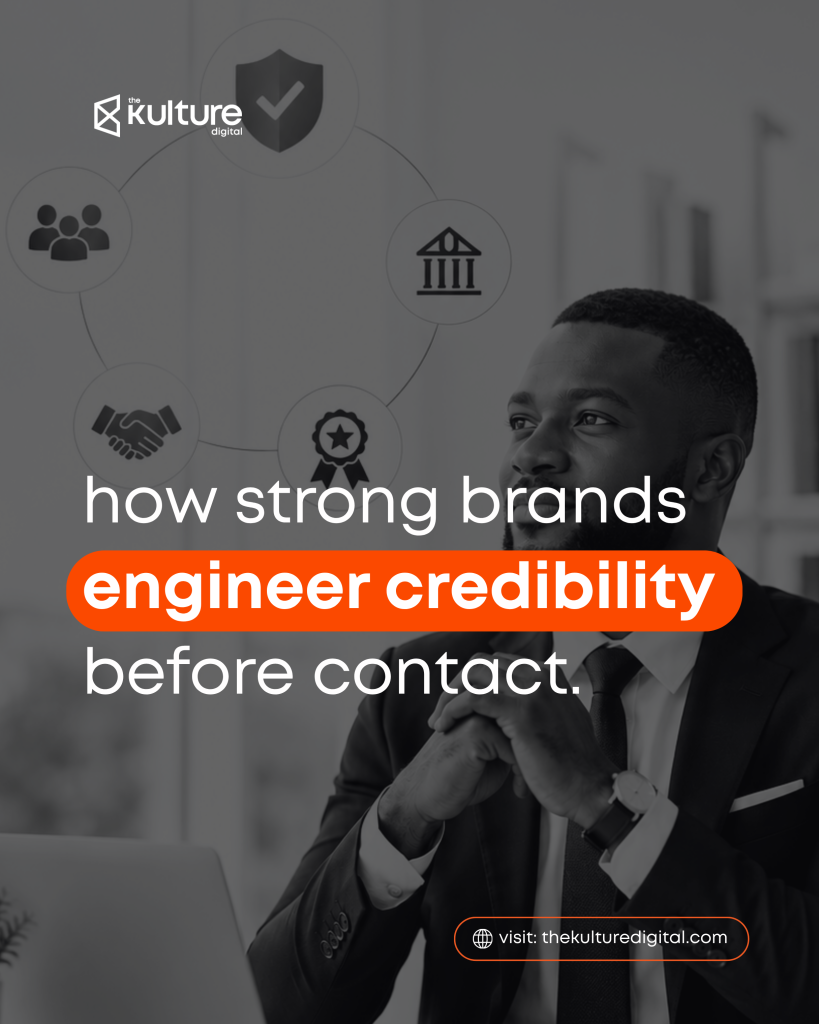
They don’t wait until they’re face-to-face with a customer to begin building trust; they engineer credibility before contact.
Credibility Begins Before the First Meeting
Think about the last significant purchase you made; perhaps you searched for reviews, visited the company’s website, read customer testimonials, checked their social media pages, or looked at what others were saying. Without realizing it, you were answering one question:
“Can I trust this brand?”
By the time you reached out, much of that decision had already been made. The meeting wasn’t where credibility was created; it was where credibility was confirmed.
Life Gives Us the Same Lesson
Imagine being introduced to a new colleague. Before they arrive, someone tells you: “You’ll enjoy working with her. She’s dependable.” Immediately, you begin to expect dependability. Of course, they’ll still have to live up to that expectation. But the introduction has already shaped your perception.
Brands experience the same phenomenon every day. People don’t encounter them in isolation; they encounter stories about them.
How Strong Brands Build Credibility Before Contact
Credibility rarely comes from one impressive moment. It’s the result of many consistent signals working together.
Strong brands invest in thought leadership that demonstrates expertise instead of simply claiming it. They earn media coverage that provides independent validation, encourage satisfied customers to share authentic experiences, maintain websites that communicate clarity and professionalism, build leadership profiles that reinforce trust, and ensure that when someone searches for their name, they find evidence, not empty promises.
None of these actions guarantee a sale. Together, however, they reduce uncertainty, and trust grows when uncertainty declines.
Why Public Relations Matters
This is where strategic Public Relations plays such an important role. PR isn’t only about generating headlines; it’s about shaping the environment people enter before they ever speak with you.
Every article published, interview given, insightful opinion shared, positive mention, or search result contributes to a larger story. That story becomes your reputation. And your reputation influences decisions long before your sales team has the chance to make a pitch.
The Brands That Feel Familiar
Some brands feel trustworthy the moment we discover them. Not because we’ve used their products, but because every signal points in the same direction. Their message is consistent, their leaders are visible, others speak well of them, and their digital presence reflects who they claim to be.
Nothing feels forced, everything feels aligned. That’s not luck; it’s intentional.
Final Thoughts
Perhaps the most important conversation your brand has isn’t the one happening in the meeting room; it’s the one happening before anyone ever books the meeting. That’s where credibility is often won, or lost.
The strongest brands understand this. They don’t leave trust to chance; they build it deliberately. One article, recommendation, search result, meaningful interaction at a time.
Because people rarely experience your brand first. They experience what they already believe about it. And when credibility arrives before contact, trust doesn’t have to start from zero; it already has a foundation.